
Custom joinery can recover difficult corners and create a consistent visual language, but it also introduces fabrication time, precise measurement and future repair obligations. A Hong Kong interior design company should compare bespoke work with good-quality standard products against real dimensions, storage needs, life-cycle cost and the possibility that the space may change.
When to invest in bespoke cabinets and furniture, and when standard products offer better flexibility in Hong Kong.
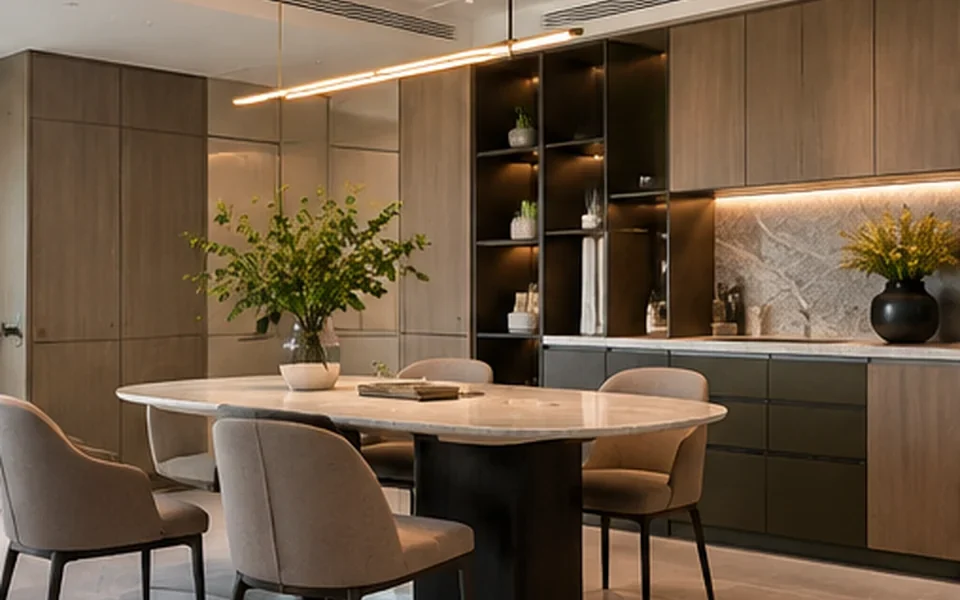
Use bespoke work where the geometry demands it
A deep storage wall can resolve an irregular apartment, while a built-in banquette can improve restaurant circulation. Take measurements after any relevant finishes are established and allow tolerances. Avoid forcing a fixed unit into a space with unresolved services or access requirements. The design should show usable internal dimensions, not only overall elevations.
Keep moveable items moveable when possible
Workplaces change headcount; hotel operators replace damaged chairs; a family may need a different dining configuration. Standard furniture allows replacement and reconfiguration with less disruption. Compare product dimensions and clearances rather than selecting from catalog images. A smaller number of well-chosen moveable pieces may serve the brief better than fully fitted rooms.
Review joinery as a technical package
Shop drawings should identify substrate, veneer or laminate, ventilation, cable routes, hardware and fixing method. Request representative samples for door edges, metal trims and lighting integration. Ask whether equipment can be removed for servicing without dismantling the whole cabinet. Coordinate fabrication tolerances with walls and floor levels on site.
Compare total ownership, not just initial cost
Include lead time, factory inspection, transport, installation, repair access and replacement parts in the comparison. Standard products may have stronger warranties or predictable availability, while bespoke items can make better use of space. Keep a record of supplier references and materials so future alterations are possible.
Example: a practical project decision
Example: An office originally proposed fixed benching across an entire floor. The plan retained custom reception storage but switched workpoints to modular desks, making future team changes easier.
Putting this into practice
At the next review, ask the project team to identify which areas truly require custom dimensions. The following discussion should address how to check servicing and ventilation behind all fixed furniture. Document the assumptions, responsible people and any unresolved questions before approving drawings or supplier orders. Before the next commitment, review prototypes or finish samples before fabrication and compare replacement and modification costs. Where building management instructions, technical submissions or specialist work are involved, seek the advice of properly qualified parties. A useful decision record explains not only what was chosen but why, with any effect on budget, maintenance, user comfort or construction programme clearly stated.
A short decision checklist
- Identify which areas truly require custom dimensions
- Check servicing and ventilation behind all fixed furniture
- Review prototypes or finish samples before fabrication
- Compare replacement and modification costs
Frequently asked questions
Is bespoke furniture always more expensive?
It varies with complexity and quantity; the proper comparison includes installation, durability and flexibility.
When should joinery measurements be finalised?
After relevant site conditions are verified and before fabrication drawings are approved.
Continue reading
 Hong Kong Interior Design Company: A Clear Design Brief for Mixed-Use Spaces
 Hong Kong Interior Design Company: Designing for Maintainability From Day One
 Hong Kong Interior Design Company: Avoiding Delays in Procurement and Installation
 Interior Design in Hong Kong: Natural Light Without Losing Privacy